
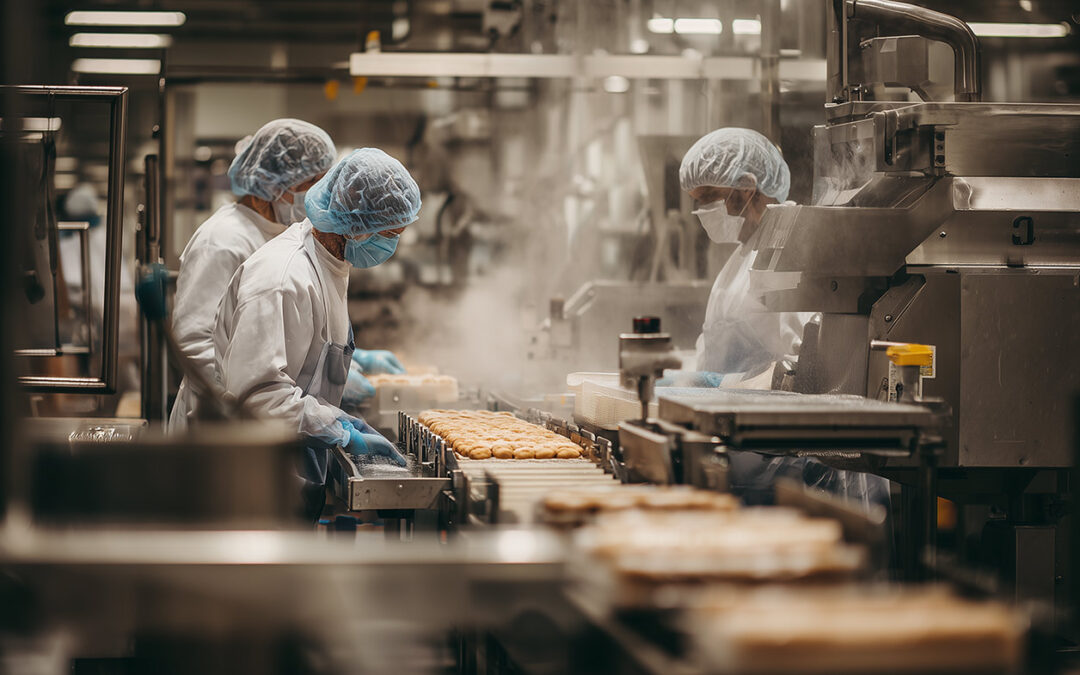
The industrial refrigeration in food processing facilities plays a fundamental role in food preservation and in ensuring that products reach the end consumer in perfect condition. In an industry where quality, safety, and regulatory compliance are essential, having reliable and efficient refrigeration systems is a strategic necessity for any company involved in the production, processing, or storage of food.
From meat and dairy industries to fruit, vegetable, seafood, and prepared food processing plants, precise temperature control is essential at every stage of the production chain. Refrigeration helps slow the growth of microorganisms, preserve the nutritional properties of food, and maintain important characteristics such as flavor, texture, aroma, and visual appearance.
Resource Optimization
Furthermore, the growing consumer demand for fresh, high-quality food has increased the importance of having modern refrigeration facilities tailored to the needs of each process. Today, companies not only seek to preserve food but also to optimize resources, reduce energy costs, and minimize the environmental impact of their operations. As a result, technological innovation in industrial refrigeration has become a key factor in improving the competitiveness of the food industry.
Another important aspect is compliance with the strict health and food safety regulations governing food production and distribution. Authorities require accurate temperature records to be maintained and the cold chain to remain uninterrupted at all times. A failure in refrigeration systems can lead to significant financial losses, product recalls, and even reputational damage that may be difficult to recover from.
In this context, industrial refrigeration in food processing facilities is not only a preservation tool but also an essential element in ensuring operational efficiency, final product quality, and the confidence of customers and consumers. Throughout this article, we will examine its main applications, technologies, and benefits within the modern food industry.
Why Is Temperature Control So Important?
Perishable foods require specific storage conditions to maintain their original characteristics. The cold chain must be maintained continuously from processing through to delivery to the final consumer.
Among the main benefits of proper refrigeration are:
- Prevention of bacterial growth.
- Preservation of the nutritional quality of food.
- Maintenance of flavor, texture, and appearance.
- Compliance with health and quality regulations.
- Reduction of economic losses caused by product spoilage.
A failure in the refrigeration system can have serious economic and reputational consequences for companies in the food industry.
Applications of Industrial Refrigeration in Food Processing Facilities
Industrial refrigeration in food processing facilities is present at numerous stages of production.
Cold Storage Rooms
Cold storage rooms allow raw materials and finished products to be stored at controlled temperatures. These facilities are essential for sectors such as meat, dairy, seafood, fruit and vegetable processing, and prepared foods.
Climate-Controlled Production Areas
Many manufacturing processes require environments with specific temperatures to ensure product quality and food safety. Industrial climate control helps maintain stable conditions throughout the production process.
Cooling and Freezing Tunnels
After certain thermal processes, products must rapidly reduce their temperature to avoid microbiological risks. Cooling and freezing tunnels achieve this objective quickly and efficiently.
Logistics Storage
Food logistics centers require refrigeration systems capable of maintaining large volumes of goods under optimal conditions for extended periods.
Most Common Technologies Used in Industrial Refrigeration for Food Processing Facilities
Technological advancements have enabled the development of increasingly efficient and sustainable systems for the food industry.
Ammonia Refrigeration
Ammonia remains one of the most widely used refrigerants in large industrial installations due to its high energy efficiency and low environmental impact.
CO₂ Systems
Carbon dioxide has become an increasingly popular alternative thanks to its excellent thermodynamic properties and low global warming potential.
Cascade Refrigeration
These systems combine different refrigerants to maximize efficiency and adapt to the specific requirements of each installation.
Smart Monitoring
Modern systems incorporate sensors, automation, and remote monitoring tools that enable real-time control of temperatures, energy consumption, and equipment performance.
Energy Efficiency and Sustainability
Sustainability is currently a top priority for the food industry. Refrigeration systems account for a significant portion of the energy consumption in many facilities, making performance optimization a major opportunity for cost savings.
Common measures include:
- Waste heat recovery.
- Use of variable frequency drives.
- High-efficiency thermal insulation.
- Process automation.
- Implementation of refrigerants with lower environmental impact.
Combining these solutions helps reduce operating costs and minimize the carbon footprint of facilities.
Preventive Maintenance: A Necessary Investment
Regular maintenance is essential to ensure the proper operation of any industrial refrigeration system. A preventive strategy helps detect potential issues before they become serious failures.
The most common maintenance tasks include:
- Inspection of compressors and condensers.
- Monitoring for refrigerant leaks.
- Cleaning of heat exchangers.
- Verification of sensors and control systems.
- Inspection of insulation and safety components.
Proper maintenance extends equipment lifespan and ensures the continuity of production processes.
The Future of Industrial Refrigeration in Food Processing Facilities
Digitalization, automation, and sustainability are shaping the future of industrial refrigeration in food processing facilities. The integration of technologies based on artificial intelligence, predictive analytics, and advanced monitoring will further improve operational efficiency and food safety.
Companies that invest in modern and efficient systems will be better prepared to face future regulatory, energy, and environmental challenges while ensuring the highest quality of their products and maintaining consumer trust.
At Intersam, we have been working on industrial refrigeration projects across all types of industries since 1995. That is why we can provide the best industrial refrigeration solutions for food processing facilities. Contact us, and we will be happy to provide you with more information.