
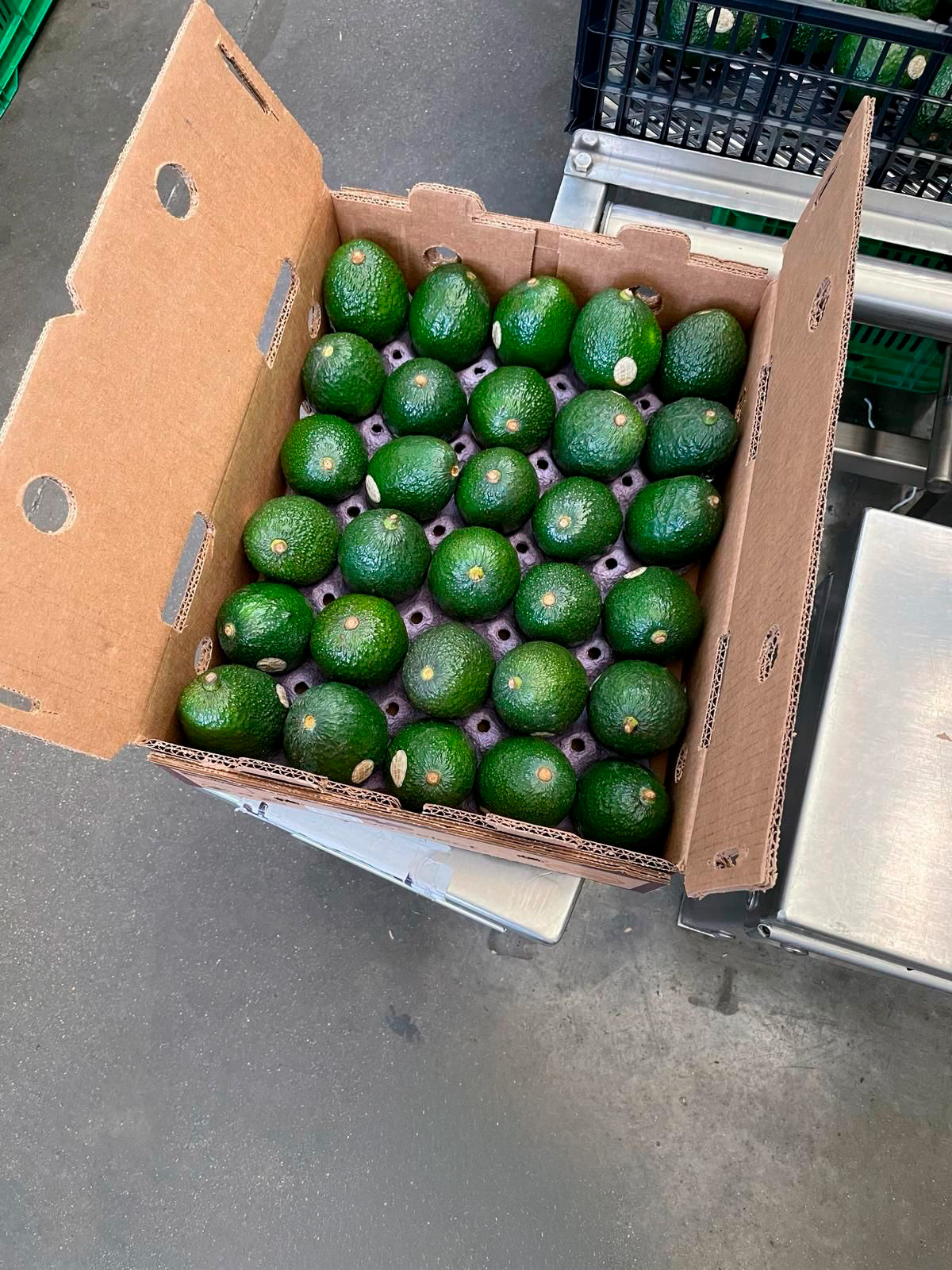
The avocado process is a carefully designed chain that seeks to preserve the quality of this highly demanded fruit worldwide. From harvesting to reaching the final consumer, each step is carried out under technical criteria that ensure its freshness, flavor, and nutritional value.
Harvesting at the optimal point
Avocados must be harvested at the exact right time. If picked too early, the pulp will be tasteless; if picked too late, there’s a risk of over-ripening. To avoid this, indicators such as dry matter content and fruit firmness are used.
Damage-free transport
Once harvested, it is essential to avoid mechanical damage. Avocados have delicate skin, and any bump can cause internal black spots that reduce their commercial value. Transport is carried out in ventilated containers, with minimal movement and no compression, to maintain the integrity of the fruit.
Postharvest and atmosphere control
In this phase, rapid cooling and storage in controlled atmospheres are key. Maintaining temperatures close to 5 °C and appropriate levels of oxygen and carbon dioxide helps slow down ripening. Additionally, ethylene—a natural hormone that accelerates the ripening process—is carefully controlled to synchronize the optimal ripeness point at the destination.
Proper packaging for export
Packaging plays a vital role in preserving the fruit. Ventilated boxes and impact-absorbing materials are used. For exports, edible coatings are applied to reduce water loss and extend the avocado’s shelf life without affecting its quality.
Preservation until the consumer
Thanks to food engineering, the avocado reaches the point of sale in excellent condition. The entire avocado process has been designed so that the consumer enjoys an appealing, nutritious, and safe product. This approach ensures the fruit retains its functional properties until the moment of consumption.
The success of this chain lies in the application of scientific and technological knowledge to ensure high-quality avocados anywhere in the world.