
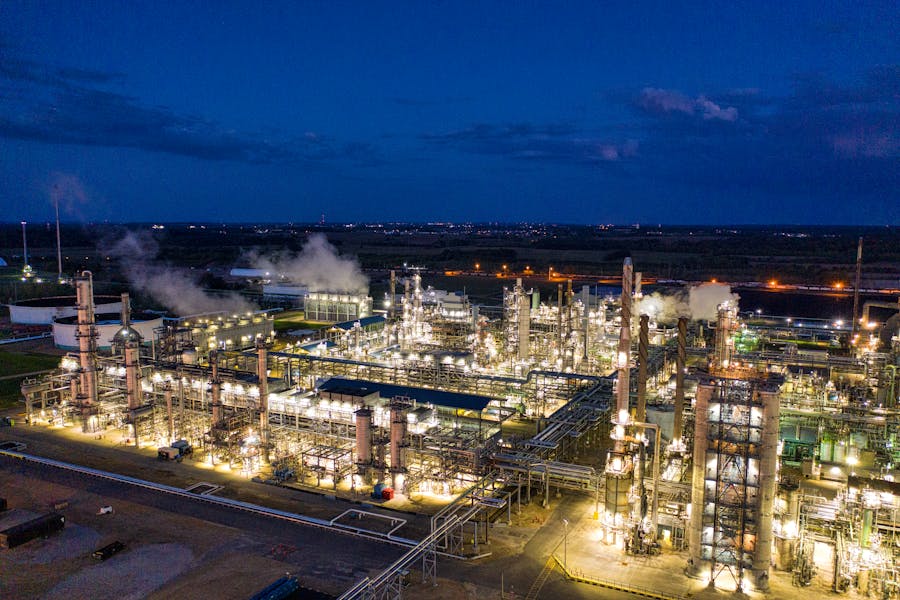
The importance of refrigeration in chemical plants is fundamental for the safe, efficient, and continuous operation of processes. From early production stages to final storage, temperature control ensures product quality, compound stability, and protection of workers and the environment. In chemical and petrochemical facilities, where reactions are highly sensitive and materials hazardous, a well-designed refrigeration system becomes a critical operational tool.
Why refrigeration is crucial in chemical plants
Chemical plants operate under complex conditions, with reactions that often release large amounts of heat. Any thermal deviation can trigger a chain reaction, leading to product degradation or serious industrial accidents.
Managing the heat produced by exothermic reactions is one of the main challenges. An efficient refrigeration system is essential to avoid safety risks and maintain optimal process conditions.
Some substances, like organometallic compounds, require temperatures between -45°C and -100°C to remain stable. Achieving these conditions demands specialized industrial refrigeration equipment designed for continuous, safe operation.
Moreover, during stages like condensation and evaporation, thermal control is vital to ensure compound purity, separate mixtures, and concentrate solutions efficiently. Poor thermal management leads to higher energy consumption and product quality loss.
Finally, proper refrigeration preserves the physicochemical properties of heat-sensitive products during storage and transportation, reducing risks during handling and distribution.
Main functions of refrigeration systems in chemical plants
The primary role of refrigeration equipment in chemical plants is to eliminate residual heat, preventing thermal accumulation that could disrupt operations.
In intense reactions, heat exchangers and industrial coolers absorb and dissipate heat continuously, maintaining stability and preventing overheating.
Maintaining temperature within narrow margins is also crucial. Small deviations can alter sensitive chemical processes. Therefore, facilities use cooling towers, automated thermal control systems, and real-time monitoring technologies to adjust conditions.
Equipment tailored to each process
Not all processes require the same cooling level. Heat exchangers for refrigeration in chemical plants transfer thermal energy between fluids without mixing, using air or water systems to ensure thermal stability.
Additionally, industrial refrigeration units using compression and evaporation systems achieve extremely low temperatures, crucial for sensitive reactions and product preservation.
The role of refrigeration and heat exchangers in the petrochemical industry
In the petrochemical sector, refrigeration in chemical plants ensures process safety and efficiency during petroleum transformation. Cold is vital for controlling pressure, enabling selective reactions, and stabilizing volatile gases during petroleum distillation.
Cold as a control tool
Refrigeration also adjusts solubility to separate unwanted elements like waxes and asphalts, improving oil quality.
At low temperatures, valuable compounds like alkylates are synthesized, demonstrating the importance of thermal precision in these processes.
Specialized equipment for extreme temperatures
Petrochemical plants use ammonia-based systems operating from -38°C to 15°C. When temperatures below -40°C are needed, propane offers safe, stable cooling.
In polymer production, ultralow temperatures of up to -85°C are crucial for controlling reactions and defining final product quality.
Energy-efficient heat exchangers
Like in chemical plants, heat exchangers in petrochemical plants optimize thermal management. They transfer heat efficiently in processes like heating, cooling, distillation, and condensation, especially in space-limited offshore platforms.
Versatility across the production chain
Throughout the petrochemical chain, heat exchangers contribute to solvent condensation, hydrocarbon cooling, reactor temperature regulation, and energy recovery from intensive processes.
The integration of industrial refrigeration and thermal exchange systems forms the backbone of safe, efficient, and sustainable operations.
Intersam: custom refrigeration solutions for chemical and petrochemical plants
At Intersam, we develop custom heat exchangers tailored to each project’s materials, conditions, and requirements. With over 30 years of experience, we are leaders in industrial refrigeration and HVAC solutions worldwide.
Our advanced thermal transfer systems —air-water, water-air, air-refrigerant— guarantee energy efficiency, durability, and reliability in all types of facilities.
If you seek a partner to turn your thermal challenges into effective refrigeration solutions for chemical or petrochemical plants, trust Intersam to deliver excellence.